By Chad Jenkins and Matt Taylor, AAAI-26 Program Chairs
The experience of leading the AAAI-26 Program can be summed up in one statement: Success brings better problems.
When we took on the role of Program Co-Chairs for AAAI-26, we knew it was going to be a lot of work. But this was going to be the first AAAI outside of North America. Would our submission numbers drop significantly compared to AAAI-25? What was the minimum number of attendees that we needed to cover our expenses? How much money might the AAAI organization lose because not enough people would travel to Singapore? But then, surprise, submission numbers climbed steadily through the abstract registration period. When the count pushed past 30,000 abstracts, to be honest, we were worried. The tremendous engagement, global reach, and intellectual quality of submissions to AAAI-26 was awe inspiring. But, at that scale, a single hiccup in the review process could cascade into something genuinely unmanageable. But the catastrophes that could potentially happen never did. What happened instead was a community that rose to the occasion in a way that still leaves us both humbled and grateful.
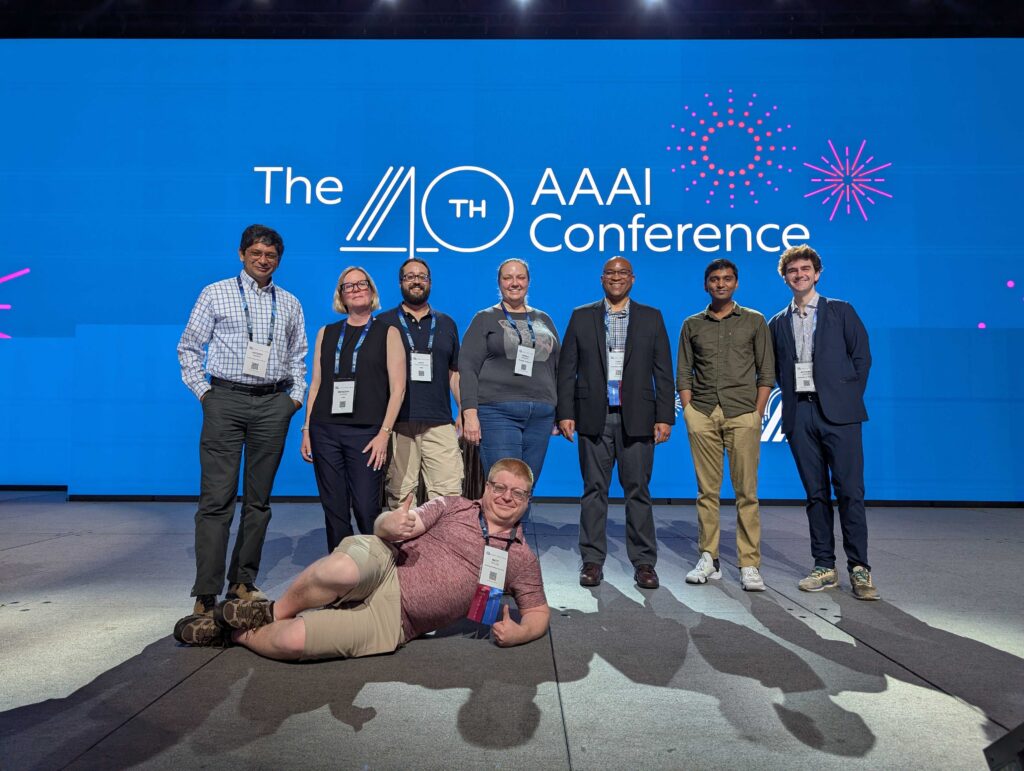
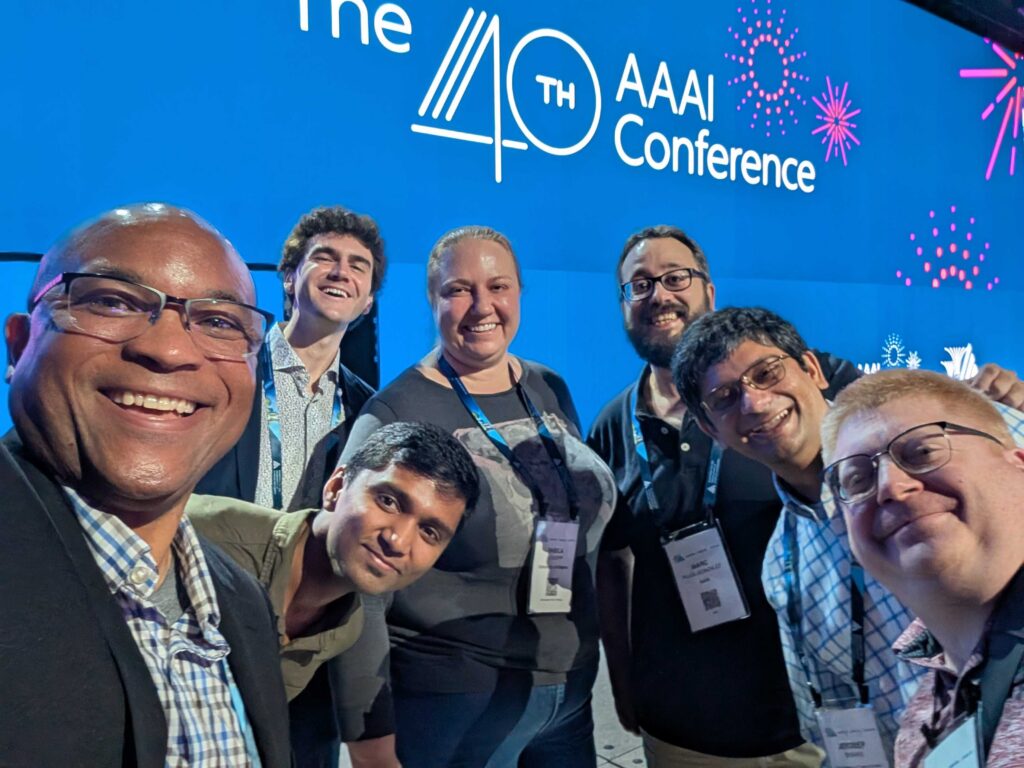
The review process worked because of the many great people who came together for our Program Committee. Our Associate Program Chairs (Bo An, Joydeep Biswas, David Crandall, Matt Lease, and Kiri Wagstaff) brought steady leadership and deep expertise to a process none of us had navigated at this scale before. The special track chairs, Andrew Perrault, Daniel Sheldon, Dylan Hadfield-Menell, Lindsay Sanneman, and Sarath Sreedharan, were outstanding in seeing submissions in nascent areas that rival (and now dwarf) the size of the main track just over a decade ago. Our Workflow Chairs built custom systems on the fly to handle volumes that existing tools simply were not designed to handle. And, at the same time, we built and piloted the first use of LLMs to help provide reviews for a major conference (for more details, please see https://arxiv.org/abs/2604.13940). Fei Fang and her team developed a multi-factor paper matching system that got the right papers to the right reviewers. And our 28,000+ Program Committee members showed up, did the work, and helped us produce a program we’re genuinely proud of. Every one of those nearly 26,000 submitted papers received at least two human reviews, and every paper that was promoted to Phase 2 received at least three human reviews. That is no small thing.
One thing we did not fully anticipate was the sheer volume of email. With around 70,000 distinct authors submitting one or more papers, every question that could be asked was asked — often thousands of times. The edge cases multiplied faster than we could address them, and keeping up became one of the most demanding parts of the job. We got through it, but it’s a challenge we’ll need to think carefully about if submission numbers remain at this level. Scaling the science of a conference is hard; scaling the human communication around it may be even harder.
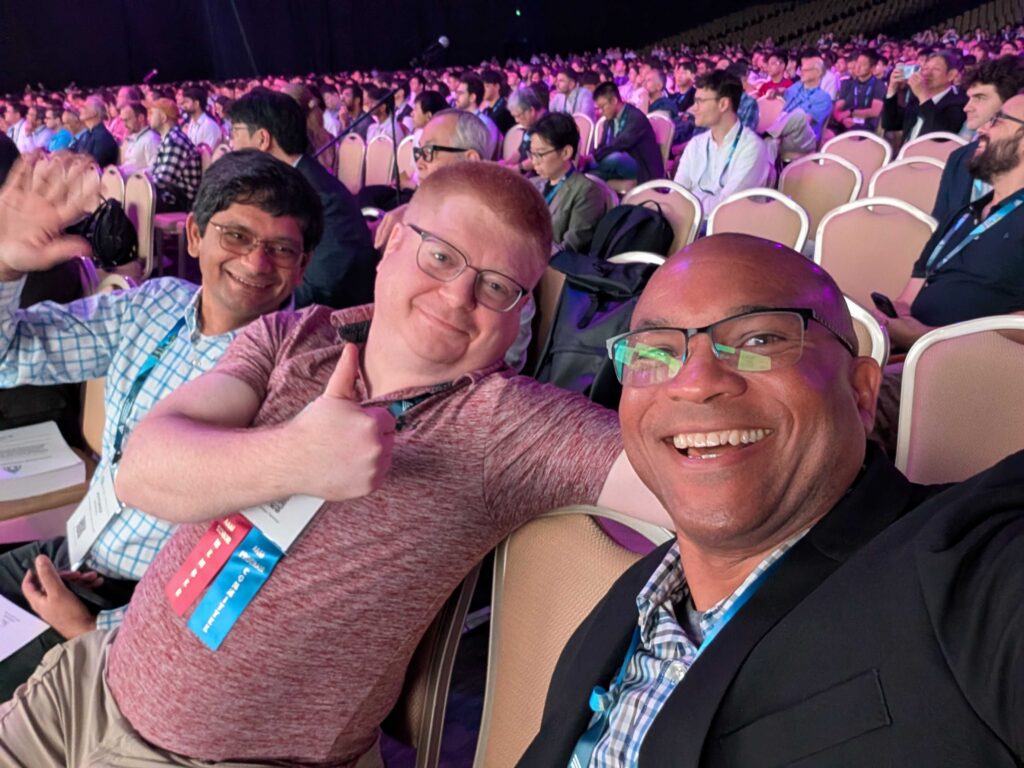
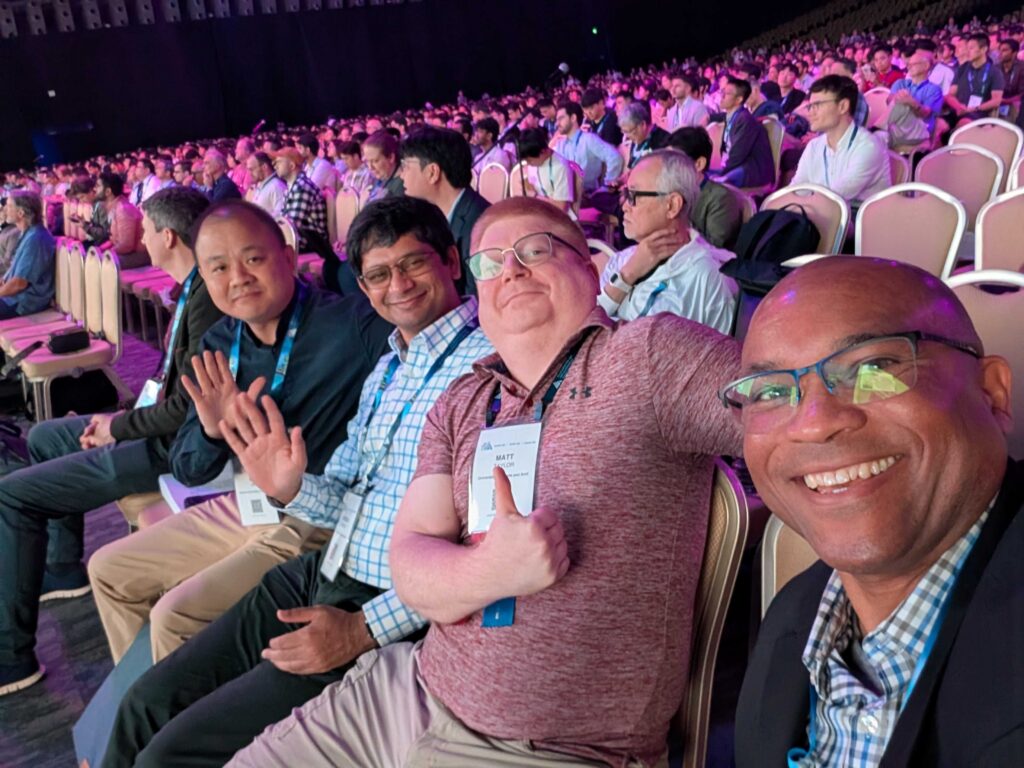
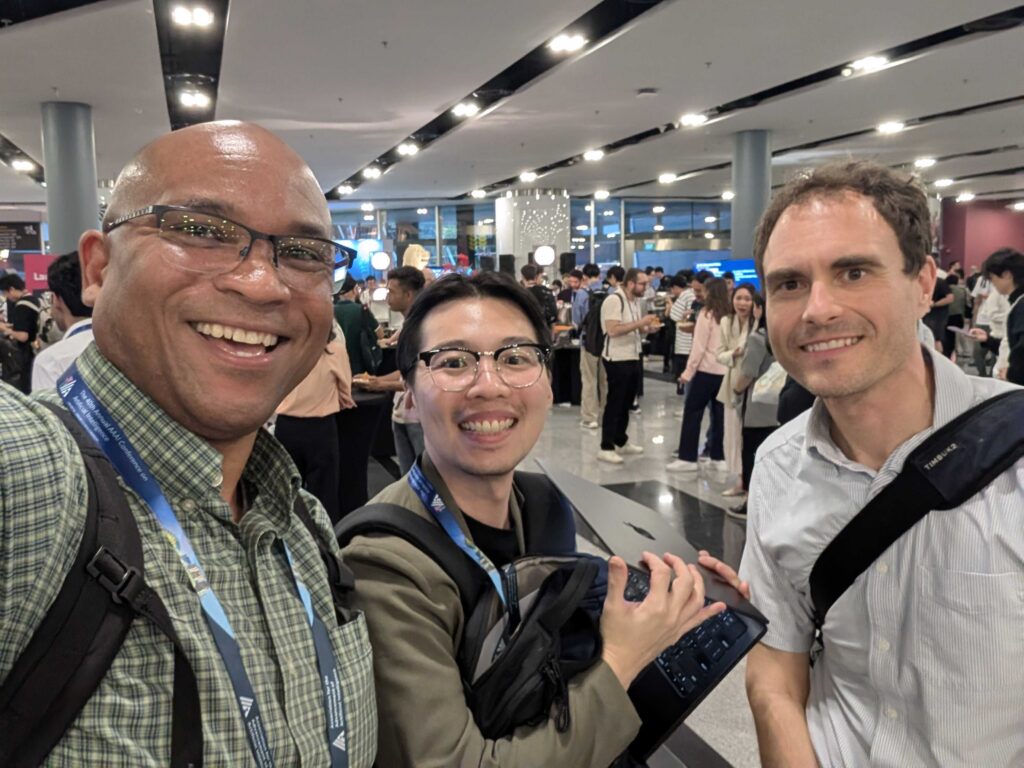
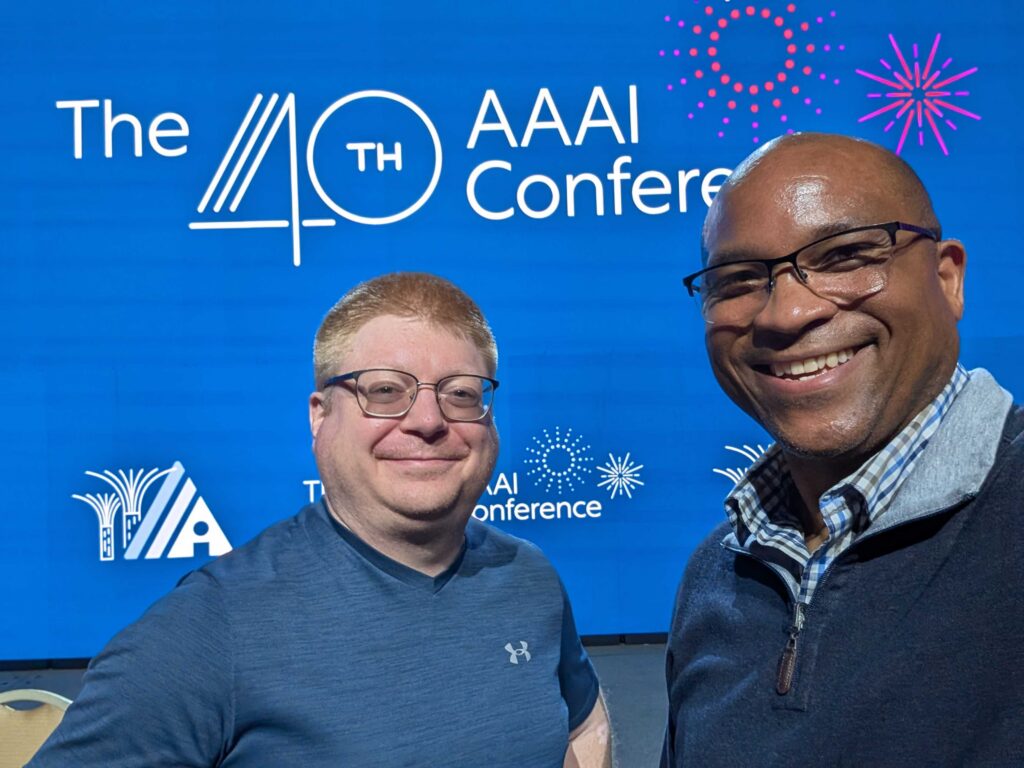
The conference itself, though, was a joy. The Singapore EXPO was a fantastic venue. The AAAI staff (Ida Camacho, Kelly Gallagher, Chesley Grove, Casey Jones, and Ashley Short) performed above and beyond to make everything run with a smoothness that felt almost magical from start to finish. Weslie Khoo deserves a special shoutout for organizing social events that kept the energy high all week. There was a real sense throughout the conference that people weren’t just attending talks, they were genuinely connecting with each other. One small but telling moment: the AAAI-26 sign near registration became an unofficial gathering spot. There was almost always someone taking a photo or a selfie in front of it. People were happy to be there. That matters.
Which brings us to something we think about a lot: why do people come to conferences? Not for the proceedings, as those are online. They come because of the conversations that happen in hallways, at dinners, and yes, in front of signs. Our theme this year was Building Bridges Within and Beyond AI, and the 10,000+ attendees who traveled to Singapore are themselves evidence that our community values those bridges. We want to keep building them. A conference has to offer something a journal submission can’t, and we believe AAAI-26 delivered on that promise. We are already thinking about how to carry that spirit forward. The best outcome of a great conference isn’t just a great proceedings. It is a community that can’t wait to meet again— to both share our intellectual progress and commitment to uplifting each other.
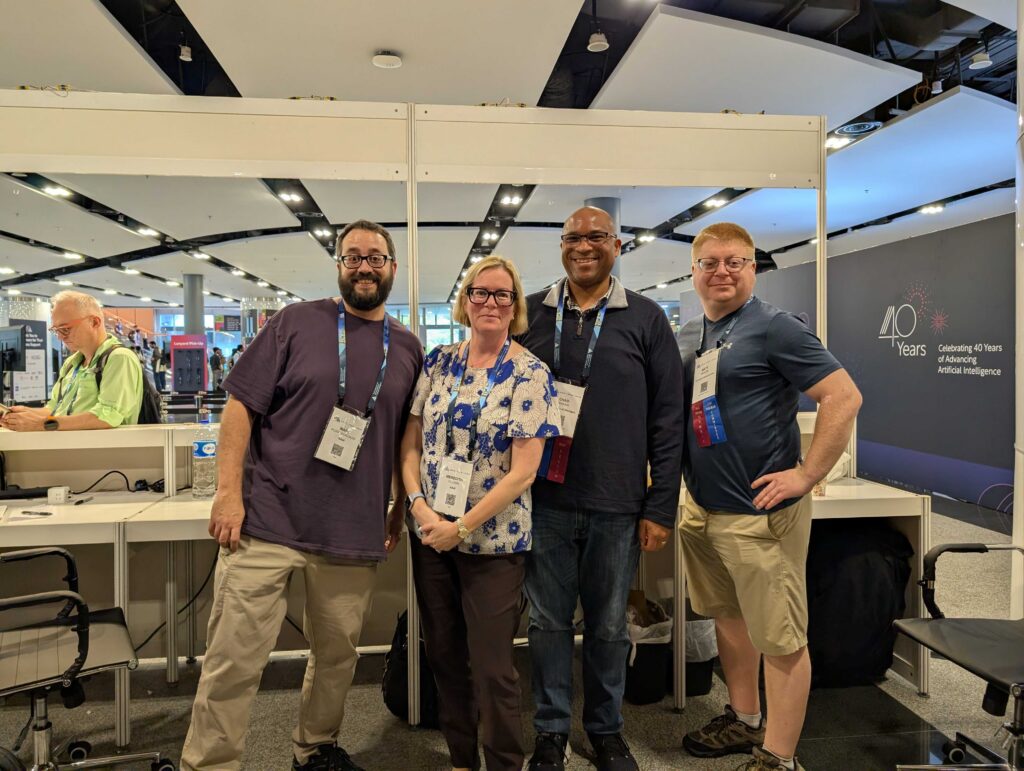
This brings us to our proudest (and hopefully most lasting) results from AAAI-26, which is the elevation of Marc Pujol to AAAI Director Program Operations & Systems. For all of the responsibilities we discussed above, Marc was at the core of making everything in our organizational workflow happen and work effectively. AI conferences are no longer simply a bespoke scholarly endeavor that falls within the discretionary effort of AI researchers and practitioners. Successful AI meetings now require a large organizational apparatus. The AAAI staff are essential (now more than ever) for a sustainable conference workflow that brings both year-to-year continuity that builds on learned best practice and scalability for our growing community. Our teambuilding (and daily meetings) with both Marc and Meredith Ellison was the biggest key to our successes in meeting the bigger and better challenges of the largest AI conference in history.
We are excited to see the next level of accomplishment that will be possible with this new foundation of volunteers and staff working together.
Looking forward to seeing you and our continued growth for AAAI-27 in Montreal next February 2027!